Dental Health and Surgical Care
Dental Health
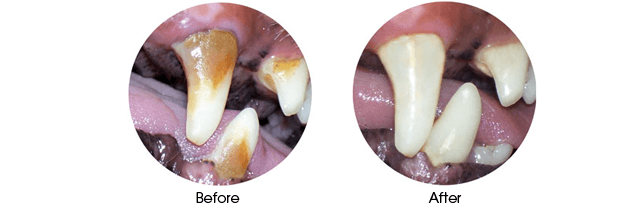
Dental disease is a common problem with our furry friends. Regular dental check-ups with your veterinarian are essential to keep your pets teeth and gums healthy. Good dental care can increase your pet's health, vitality, and well-being and help ensure your special companion leads the best life possible.
Dogs and cats can build up plaque and tartar on their teeth just as people can. Plaque builds up and mineralizes into tartar on teeth that can cause gingivitis and peridontal disease. This can lead to bad breath, loss of teeth and even more serious health conditions such as heart disease, kidney disease, liver disease and sinus infections.
Additional signs of dental disease include:
At our veterinary hospital, the dental care we provide includes:
Dogs and cats can build up plaque and tartar on their teeth just as people can. Plaque builds up and mineralizes into tartar on teeth that can cause gingivitis and peridontal disease. This can lead to bad breath, loss of teeth and even more serious health conditions such as heart disease, kidney disease, liver disease and sinus infections.
Additional signs of dental disease include:
- Red and swollen gums
- Bad breath
- Loose or missing teeth
- Brown discoloration and plaque on teeth
- Decreased appetite or difficulty eating
At our veterinary hospital, the dental care we provide includes:
- Oral health assessments
- Teeth cleanings with ultrasonic scalers and polishing
- Diagnosis and treatment of periodontal disease
- Tooth extractions
Surgical Procedures
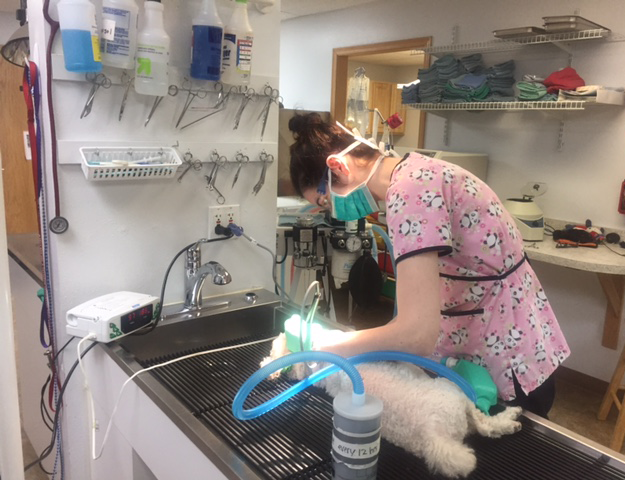
The doctors at Granite Peak are trained, skilled and experienced veterinary surgeons. They understand that the decision to allow your pet to undergo surgery is never an easy one.
We strive to make this experience for you and your pet as stress free and safe as possible. Important pre-surgical exam and pre-op bloodwork (required for patients over 6 years of age) are performed. Every patient is monitored by a veterinary technician, a blood pressure doppler, and a pulse oximeter.
Post-op pain medication is provided to keep our patients as comfortable as possible. Pain medication and information sheets on proper postoperative care will also be sent home with your pet to ensure a comfortable and speedy recovery.
We strive to make this experience for you and your pet as stress free and safe as possible. Important pre-surgical exam and pre-op bloodwork (required for patients over 6 years of age) are performed. Every patient is monitored by a veterinary technician, a blood pressure doppler, and a pulse oximeter.
Post-op pain medication is provided to keep our patients as comfortable as possible. Pain medication and information sheets on proper postoperative care will also be sent home with your pet to ensure a comfortable and speedy recovery.
Soft Tissue Surgery
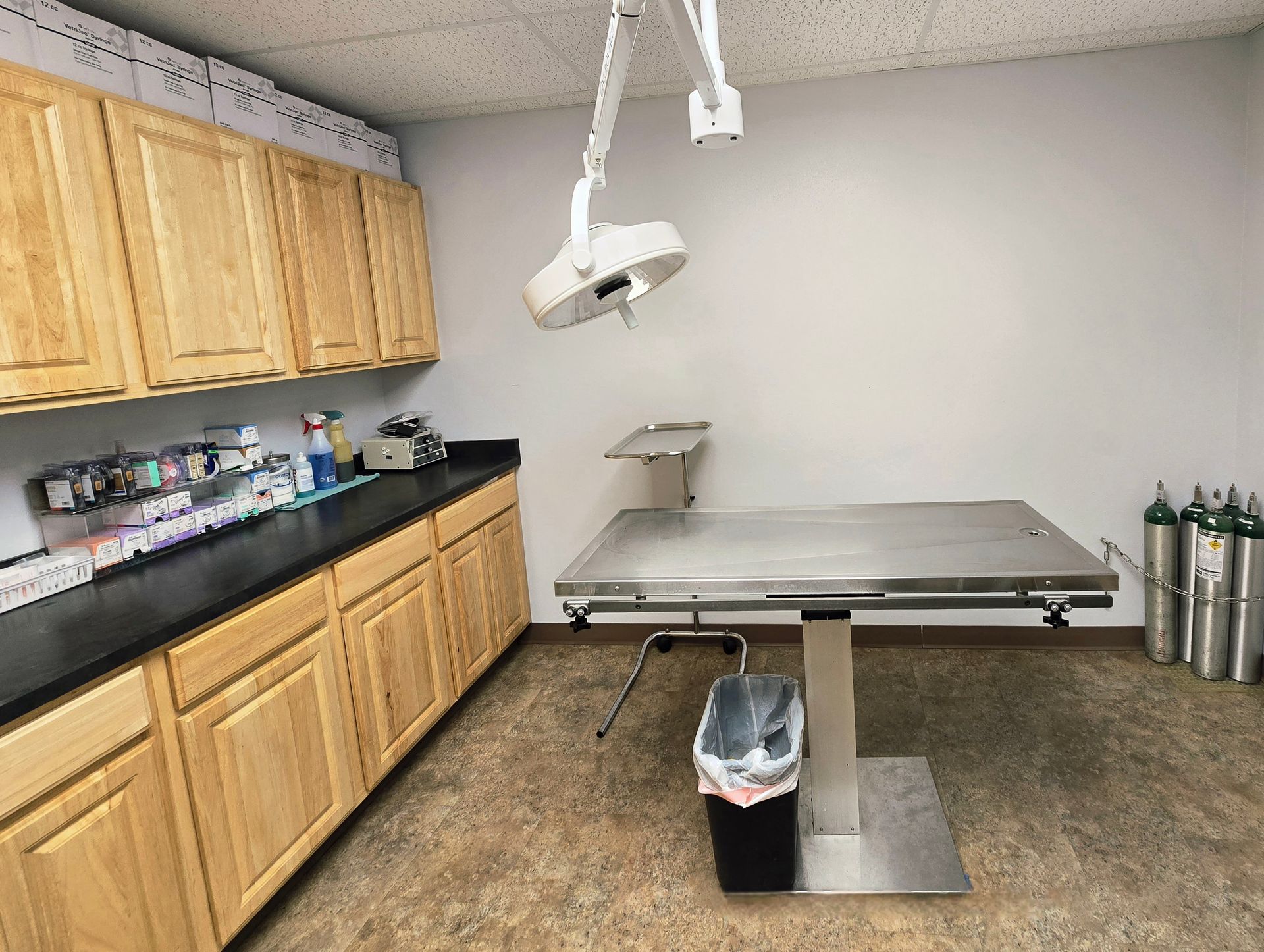
Granite Peak Veterinary Hospital offers a wide range of soft tissue surgeries that include, but are not limited to:
- Spays & neuters for dogs, cats
- Mass removals
- Laceration repairs
- Cystotomy
- Gastropexy
- Intestinal foreign body removal
- Enucleation
- Declaw
- Ear hematoma repair and many more.
- Caesarian sections
- Luxating patella surgery
- Exploratory surgery
Preparing for Surgery
We want your pet's surgical experience to be as safe and stress-free as possible. Here's what you can do to help:
- Follow pre-surgery fasting instructions carefully (discontinuing food/water/treats starting 10pm the night prior)
- Make sure your pet has a calm comfortable space to rest before and after surgery
- You're welcome to bring along a favorite blanket or toy to help them feel secure
- Monitor your pet closely during recovery & follow post-op instructions provided by our team
We offer FREE New Adoption/ New Pet
Exams!
Call 406-655-1122
Our schedule fills up fast!
Same-day spots are limited, and walk-ins can’t always be immediately accommodated. Please give us a quick call to schedule your pet’s visit (except Saturdays).
Thanks for helping us keep visits smooth and stress-free for everyone.
